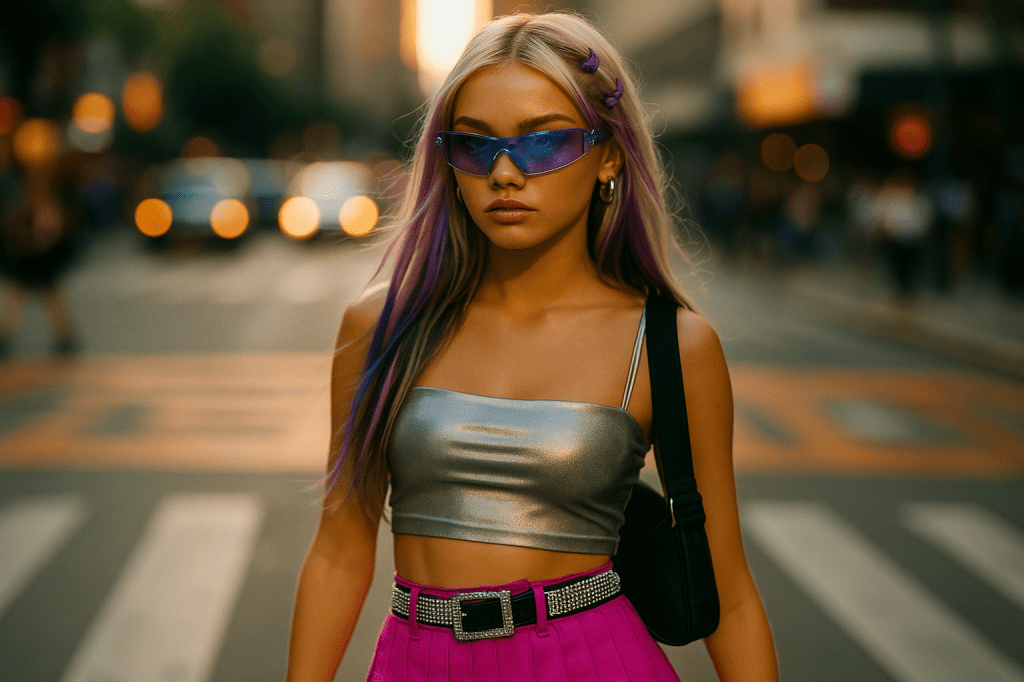
Fashion loves a resurrection, but few comebacks feel as alive as Y2K right now. What was once dismissed as tacky or “too much” has transformed into a global aesthetic with serious staying power. The low-rise jeans, glitter lip gloss, and metallic miniskirts of the early 2000s have returned, and this time they’re carried with a knowing wink. It’s not nostalgia for nostalgia’s sake—it’s a reclamation. Gen Z is remixing the pieces their older siblings (or even parents) wore, spinning them into something both playful and strangely current.
Why Y2K feels different in 2025
The thing about Y2K is that it never really belonged to one generation. Back in the day, it was the soundtrack of MTV, the shimmer of lip gloss, the endless parade of girl groups and boy bands on magazine covers. Now, it’s a whole mood board culture. Instead of flipping through teen mags, people scroll TikTok, and suddenly a blurry paparazzi shot of Paris Hilton leaving a club in 2002 becomes a template for an entire outfit in 2025. The context has changed, but the vibe? Still electric.
The raw, messy energy of imperfection
Unlike sleek minimalism, which thrives on control, Y2K is built on chaos. A rhinestone belt that doesn’t quite match your shoes, a bag that feels like a toy, sunglasses tinted in orange or lime green—it’s a style that celebrates contradictions. There’s freedom in it. You can walk out the door in clashing prints, platform sneakers, and a shrunken baby tee, and instead of looking “wrong,” you look like you got the memo. That’s the magic: Y2K rewards confidence more than precision.
Culture is obsessed with throwback icons
Binge an early-2000s rom-com and you’ll see the DNA of today’s TikTok fits everywhere. But it’s not just pop stars and actresses. The era’s street style, once laughed off, is now aspirational. Remember when Juicy Couture tracksuits were everywhere? Or when butterfly clips stacked across your head were basically currency at school? Those pieces, reimagined, are back in the conversation—not as ironic statements but as wearable, everyday fashion. There’s something deeply fun about revisiting what was once mocked and watching it get the spotlight it always deserved.
The role of the internet in its rebirth
If the 2000s were about dreaming of a digital future, 2025 is about living inside it. Back then, we had flip phones and dial-up; now we have infinite scroll and filters that make you look like you walked out of a Bratz doll ad. The loop feels complete: fashion once inspired by imagined tech futures is now remixed through digital aesthetics. Shiny vinyl, holographic finishes, metallic fabrics—they all feel at home in a timeline dominated by screens. Y2K is IRL cosplay for a digital reality.
The anatomy of a Y2K look
So what makes an outfit feel authentically Y2K? It’s less about strict rules and more about layering vibes. Start with a core piece: low-rise denim, a pleated mini, or a slinky halter. Then add texture: mesh tops, glitter knits, faux fur trim. Accessories seal the deal—tiny shoulder bags, tinted shades, playful hair clips, chokers with a hint of sparkle. The more it feels like something you’d have begged your older cousin to borrow in 2003, the closer you are to nailing it.
Colors that carry the vibe
There’s a whole palette that screams Y2K without even trying: bubblegum pink, icy blue, neon green, metallic silver. It’s like candy wrappers turned couture. Unlike neutral-heavy aesthetics, this one isn’t afraid of shine. Even when muted, the shades lean dreamy—think pastel gradients, iridescent sheens, and glitter that catches the light at golden hour. It’s dopamine dressing with an early-internet filter.
Why it still resonates
Y2K fashion taps into something deeper than trends. It’s about reclaiming the drama of getting dressed. Where modern wardrobes often reduce outfits to efficiency—capsule closets, timeless basics—the Y2K revival is defiantly impractical. Why carry a microscopic shoulder bag that barely fits your keys? Because it’s fun. Why wear cargo pants with glittery rhinestones on the pockets? Because contradictions make fashion interesting. In a world where everything feels hyper-curated, Y2K thrives by being loud, messy, and unpredictable.
From thrift racks to curated edits
One reason Y2K has real longevity is sustainability. Many of the most authentic pieces are thrift finds: denim with lived-in washes, tops with playful cuts, accessories that scream vintage mall. At the same time, designers and indie brands are building curated edits that translate the spirit without feeling like costumes. If you want to dive into this universe, you can explore selections waiting right here. It’s proof that Y2K is less about nostalgia and more about building new identities from recycled codes.
How to wear Y2K without looking stuck in the past
The secret isn’t to copy every detail but to channel the energy. Mix and match. Pair a metallic mini with an oversized blazer. Throw a rhinestone belt over relaxed denim. Balance a glitter crop top with chunky sneakers instead of stilettos. By combining Y2K statements with modern silhouettes, you avoid slipping into costume territory. It’s about remix, not replica.
The small details that matter
Hair and makeup deserve their spotlight too. Glossy lips, frosted eyeshadow, streaky highlights—these looks scream 2002, but with modern products, they hit differently. Even the “imperfect” parts—like slightly messy buns with butterfly clips or eyeliner that smudges after a night out—add to the charm. Y2K doesn’t demand flawlessness. It asks you to have fun, and that’s why it works.
Conclusion
In the end, Y2K fashion survives because it’s more than a trend—it’s a playground. It’s where contradictions meet, where excess becomes beautiful, and where imperfection feels powerful. Whether you find your pieces at a vintage market, in your older sibling’s closet, or from a new generation of brands reimagining the era, what matters is how it makes you feel. Confident. Playful. Unapologetic. That’s the essence of Y2K, and it’s why the aesthetic continues to shimmer, one rhinestone at a time.
 Fashion Publications
Leave a comment